

Massive view of the Tharsis Fortress underground complex — observation towers, ventilation shafts, turquoise quantum glow
"The gas you draw into your lungs is not an unlimited gift from the Creator — it is a heavy invoice cut by the Silver Syndicate and billed to us. Every single breath you take is paid for by the cost of the burning cores of the nuclear reactors in these fortresses." — Commander Barlas, Tharsis Garrison — Steel Belt Scouts Training Address
The sun hangs on Mars's horizon like a small, pale wound — two-thirds the size and a quarter the warmth of Earth's. Its light, passing over the red sand, paints everything in a dead amber tone. On the surface, wind hurls fine grains of sand at speeds exceeding one hundred and fifty kilometres an hour. When night falls, the temperature plunges to minus one hundred and twenty degrees. The freezing cold and high cosmic radiation that slip through the thin atmosphere will drag an unprotected mortal to collapse within minutes.
This is Mars's daily weather.
And on this planet, beneath billions of tonnes of red rock, people are living.
I. THE FORTRESS BENEATH THE RED SAND: THARSIS
A Planet's Underground Heart
Tharsis Fortress is Mars's largest underground military complex — a colossal labyrinth of metallic tunnels bored into basalt rock, transformed from the natural lava tubes beneath Olympus Mons and the Tharsis region, stretching for kilometres. Here time is not measured in financial quarters as on the Moon, or in acid-rain seasons as on Earth. It is measured by the throat-burning, metallic taste of synthetic oxygen.
The fortress corridors are cold and dim. The air carries the thin, throat-scorching bite of iron oxide and the heavy, exhausted taste of carbon dioxide filtered past its limit. The irregular, wheezing groan from the thick air pipes running through corridor ceilings is nothing more than a dying planet forcing its own mechanical lungs.
Yet these cold, dark tunnels are home to the Solar System's most disciplined civilisation.
II. THE RED FLEET: THE ORDER OF IRON WILL
Not Fascist — Pragmatic
Viewed from outside, Mars's governance system appears to be a merciless military dictatorship. And largely, it is. But understanding the Red Fleet's structure requires understanding the conditions that gave it birth.
When the Great Blackout struck, Mars's Atmospheric Genesis Engines stopped. Their keys stayed on Earth — locked inside the rusted quarantine the Cyber-Khanate had built. Those colossal machines that were to turn Mars's sky blue, weave an atmosphere, and create a habitable world turned to dead metal overnight.
What remained: an irradiated hell, limited synthetic oxygen, and a population prepared to sacrifice anything to survive.
The Red Fleet was born in that vacuum — not as a military regime but as a survival mechanism. The chain of command was built to optimise oxygen distribution. The rank system was designed to determine calorie consumption rights. Discipline was not a luxury — it was the precondition for breathing.
Over time this mechanism became a culture, the culture an ideology, the ideology a regime. But at its core, the Red Fleet still answers a single question: "How will we breathe tomorrow morning?"
Command Structure
| Rank | Function |
|---|---|
| Commander | Sole leader — all fortress oxygen, energy, and military decisions |
| Red Falcons | Elite combat fleet under the Commander's direct command |
| Sector Directors | Officers managing each wing/sector's daily operations |
| Steel Belt Scouts | Surface patrol and reconnaissance — the most dangerous assignment |
| Reactor Engineers | Nuclear reactor maintenance and repair crews |
| Hydroponic Farmers | Algae tank and synthetic food production |
| Miners | Deep-shaft iridium and Helium-3 extraction teams |
III. THE STEEL BELT SCOUTS: THE ART OF BREATH CONTROL

Slim Martian soldier standing in a dim basalt tunnel in matte black carbon-fibre armour — holographic panels and rusty quantum pipes
Not Warriors — Survivors
The Steel Belt Scouts are known as Mars's most elite military unit. But what separates them from other armies is not combat skill — it is breath control.
In narrow, claustrophobic training tunnels — corridors with walls blackened by corrosion, where dirty condensate dripping from the ceiling pools in rust-coloured puddles on the floor — the Scouts train in modified carbon-fibre suits, carrying no plasma rifles or noisy kinetic weapons. Firing energy rounds in a restricted atmosphere means squandering oxygen.
The Scouts' true discipline: slowing their metabolisms, preserving ATP consumption in each individual cell to the millimetre. Because moving in low gravity already liquefies muscle mass, adding oxygen deprivation on top of it pushes mortal bodies to the absolute limit of collapse.
The Iron Walk

Slim Martian soldiers marching in disciplined formation on the red sand — unarmed, with back oxygen recyclers — buried engine structures on the horizon
On surface patrols the Scouts employ a tempo they call the Iron Walk: eighty steps per minute, each step precisely sixty centimetres. Breathing rhythm is synchronised to stride — two steps inhale, three steps hold, two steps exhale. Breaking this rhythm increases oxygen consumption by forty percent — and that difference is the line between life and death in the patrol's final hour.
Red-Jargon: The Economy of Syllables
Red-Jargon, Mars's military dialect, is a language designed with the oxygen cost of every syllable calculated. People on Earth speak in sentences and paragraphs. Mars soldiers speak in syllables. Sometimes in a single sound. Sometimes with a glance alone.
| Red-Jargon | Meaning |
|---|---|
| "Red walk" | Increase pace but don't panic |
| "Zero" | No threat / area clear |
| "Blood" | Radiation danger — get to shelter |
| "Iron" | Continue / path clear |
| "Lullaby" | Sleep Protocol active (stay away) |
IV. THE SLEEP PROTOCOL: MATHEMATICAL PRUNING
The Machine's Merciless Mathematics
Tharsis Fortress's artificial intelligence is neither mother nor god — it is survival's most soulless and most digital face. The population's calorie and synthetic oxygen consumption is calculated nightly by this main computer to the millimetre.
The AI cross-references the colony's total respiratory capacity against the volume of air the generators can produce. If production drops to a critical level it cannot cover — for those who contribute nothing to the system's energy cycle, who have fallen gravely ill or been crippled — the Sleep Protocol is engaged.
Ward ventilation hatches seal without a sound. The oxygen flow inside is cut slowly and replaced by a colourless, odourless carbon monoxide sleep.
This is not deliberate murder. It is a necessary mathematical pruning performed by machines so that thousands more can wake the following morning.
The Red Lullaby
In the lower levels — the quarters where Scouts and miners live — no one uses the Sleep Protocol's official name. They call it the Red Lullaby. And every night, as they stretch out on their bunks, they sleep without knowing whether the ventilation hatch will seal or not.
V. COMMANDER BARLAS: BLOOD AND IRON

Barlas in his matte black armour looking out from the observation tower at the Martian desert — holographic tactical screens and Göktürk runes
Merciless but Human
Commander Barlas stood motionless in the darkness of the observation tower. Blood-red lines flowed down from the shoulders of his matte-black combat suit. Through the polymer glass, his eyes were fixed on the howling, freezing storm and the shadows of the dead Atmospheric Genesis Engines splitting the horizon like tombstones. In the pale illumination of the fluorescent light, the deep radiation burns and battle scars on his face could be read like a map.
Barlas is nothing like İlteriş — İlteriş believes he is protecting humanity through ignorance. Barlas has sworn to keep his own people alive in this hell at whatever cost.
But that oath does not make him a hero. Barlas is the man who watches children die coughing blood, approves the Sleep Protocol, and sacrifices an entire ward to save a single drop of oxygen. His tragedy is not his ruthlessness — it is that ruthlessness is necessary.
VI. THE DEAD ENGINES AND THE DREAM OF A BLUE SKY

Only the upper parts of massive engines buried under the red sand — turbine blades and chimney tips — rising like mountain peaks from the dunes
Tombstones the Size of Mountains
On Tharsis's horizon, colossal silhouettes rise from beneath centuries of red sand: the Atmospheric Genesis Engines. Mountain-scale machines — once engineering marvels destined to turn Mars's sky blue, weave an atmosphere, and create a habitable world.
Wind sometimes scrapes the sand away and the tip of a massive turbine blade surfaces — rusted, cracked, but still there. When Scouts pass through these engines' shadow on patrol, their radiation metres give strange readings. The elders say this comes from the dormant isotopes in the engines' cores.
Some believe: the engines did not die completely, they are merely waiting.
The Story of the Key
Every Martian child knows this story: when the Great Blackout struck, the engines' activation codes remained locked on Earth, inside the quarantine built by the rusted tyrants. When the engineers built these fortresses, they had promised that one day the engines would run again and Mars's sky would turn blue.
The engineers died. The sky stayed red. But the promise remained.
And on Mars, naming is an act of hope. Children are given names like "Deniz" (Sea), "Gök" (Sky), "Yağmur" (Rain) — concepts none of them have ever seen. Because names are more durable than engines.
VII. THE RED COUGH AND SILENT DEATH

Underground medical ward — cryogenic sleep pods, sick child, Barlas touching the glass with his bare hand
The Price of Atmosphere
Tharsis Fortress's atmospheric filters exhausted their service life centuries ago. Mars is quietly suffocating its own children.
Pressure differential erodes lung tissue a little more with every surface exit and return. The medical units call it the Red Cough. This disease is seen in half of the Scouts. There is no definitive cure; the medical interventions applied only aim to slow down the dying process.
When isotope shields collapse — and they collapse regularly — hundreds fill the wards with radiation poisoning. Children are the most vulnerable: skin turned to the pale, grey cast that Mars's cosmic radiation works into cells over time, ribs rising and trembling like the wings of a small bird with every breath. A black, bloody cough rising from their lungs.
All of Barlas's military might — heavy galleons, tens of thousands of weapons — is not powerful enough to deliver a single drop of oxygen to an eight-year-old child's tiny lungs.
VIII. THE BALANCE OF TERROR: MARS'S ISOLATION

Colossal red-and-black war galleon in Mars orbit — turquoise quantum energy veins, Göktürk runes, escort ships
Between Three Powers
Mars occupies the most isolated corner of the Solar System's power triangle:
- İlteriş controls Earth by keeping technology dormant — but holds the key to Mars's engines
- Çolpan maintains economic control through the oxygen exchange — raising Mars's Helium-3 quotas daily
- Barlas commands the most powerful fleet — but if he leaves the planet, everyone he leaves behind dies
This triple deadlock is a balance of terror no one can win and everyone loses. Mars cannot reach out — because reaching out means abandoning those left behind to death. But staying inside is a slow death too.
The Red Falcons
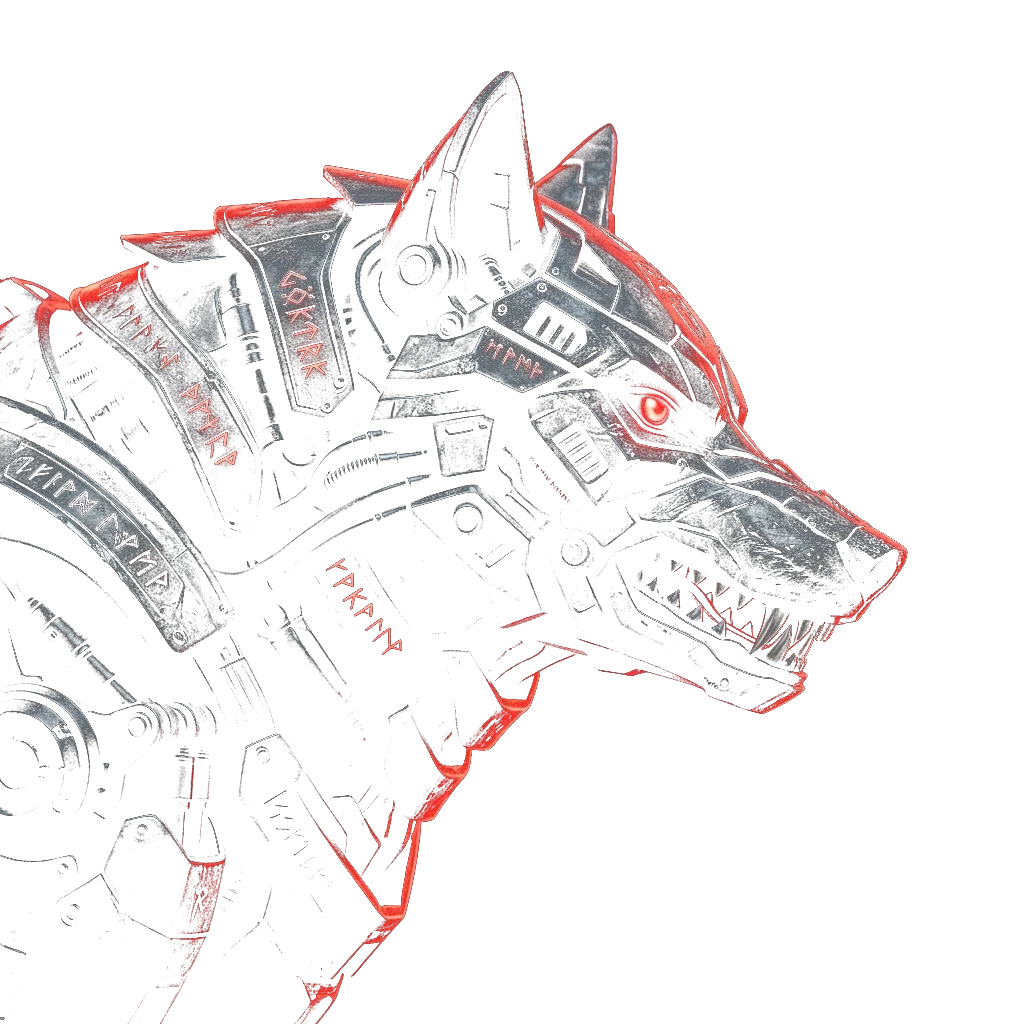
The Red Falcon galleons under Barlas's direct command are heavy warships that make Mars's orbit vibrate. The most disciplined fleet in the Solar System, its sole purpose is to seize whatever resource Mars needs for survival — from wherever it may come. This fleet is Mars's greatest sword, and its only shield.
Why Don't They Attack?
This is Mars's greatest paradox: despite possessing the Solar System's most lethal and disciplined warriors, it cannot attack. Because:
- Gravity toll — Launching an invasion fleet from Mars to Earth requires enormous energy. Spending that energy drops reactor capacity at the fortress — and those left behind surrender to the Red Lullaby.
- Technology risk — Awakening KTB technologies is İlteriş's greatest fear. Barlas knows this too — awakened technology could trigger an uncontrolled domino effect.
- Economic dependency — The Silver Syndicate's Helium-3 quota system keeps Mars in debt. Attacking means severing the oxygen supply chain.
IX. DAILY LIFE ON MARS: THE RHYTHM OF SILENCE
Anatomy of a Day
| Hour | Activity |
|---|---|
| 03:00 | Watch change — night-shift Scouts return |
| 04:00 | Breath Count — Central Intelligence calculates the oxygen consumption of returning patrols |
| 05:00 | Morning synthetic food distribution — grey protein paste, drawn through tubes |
| 06:00 | Training tunnels — breath control, metabolism deceleration |
| 09:00 | Mining shift — deep-tunnel iridium and He-3 extraction |
| 12:00 | Algae tank maintenance — hydroponic production, only fresh nutrition source |
| 15:00 | Surface patrol — Scouts exit to the surface in Iron Walk formation |
| 18:00 | Central Intelligence report — daily oxygen production/consumption balance |
| 21:00 | Quiet hours — speech prohibited, oxygen conservation |
| 00:00 | Sleep Protocol assessment — AI delivers its daily pruning decision |
Sound = Death
On Mars, making noise means burning excess calories. Excess calories means excess oxygen. Excess oxygen means stealing from someone else's breath.
This is why Martian civilisation is the quietest in human history. Laughter is a luxury; screaming is waste. Scouts are silent ghosts who understand one another with a single glance. And within that silence lies Mars's most bitter irony: to survive, they have had to abandon the very sounds that make a person human — laughter, weeping, song.
X. ON THE FREQUENCY OF THE FUTURE
Seen from Mars's observation tower, Earth is a distant, hazy, toxic yellow dot. Sometimes lightning flashes through the sulphur clouds — perhaps an acid storm, perhaps a burning city. Mars neither knows nor cares. Mars only counts its own breaths.
But the old engineers whisper: the isotopes at the engines' cores have not entirely died. In the deepest tunnels, between the basalt walls, a vibration is sometimes felt — one not coming from the generators, untraceable to any source, an impossibly fine resonance. The Central Intelligence logs it as "seismic anomaly."
But the old engineers use a different name: "The Engine's Breath."
And perhaps — perhaps one day — a signal will come. From afar, from an unexpected place. And that signal will wake the engines that have slept for centuries — for a few seconds their colossal turbines will draw breath for the first time in hundreds of years, blasting a white plume of water vapour into the air.
When that moment comes, Barlas will know: someone has found the key.
And Mars — that silent, iron-willed civilisation built of steel and sand — will finally move.
Root Order Universe Archives — Third Article therootorder.com | kok-nizam.com