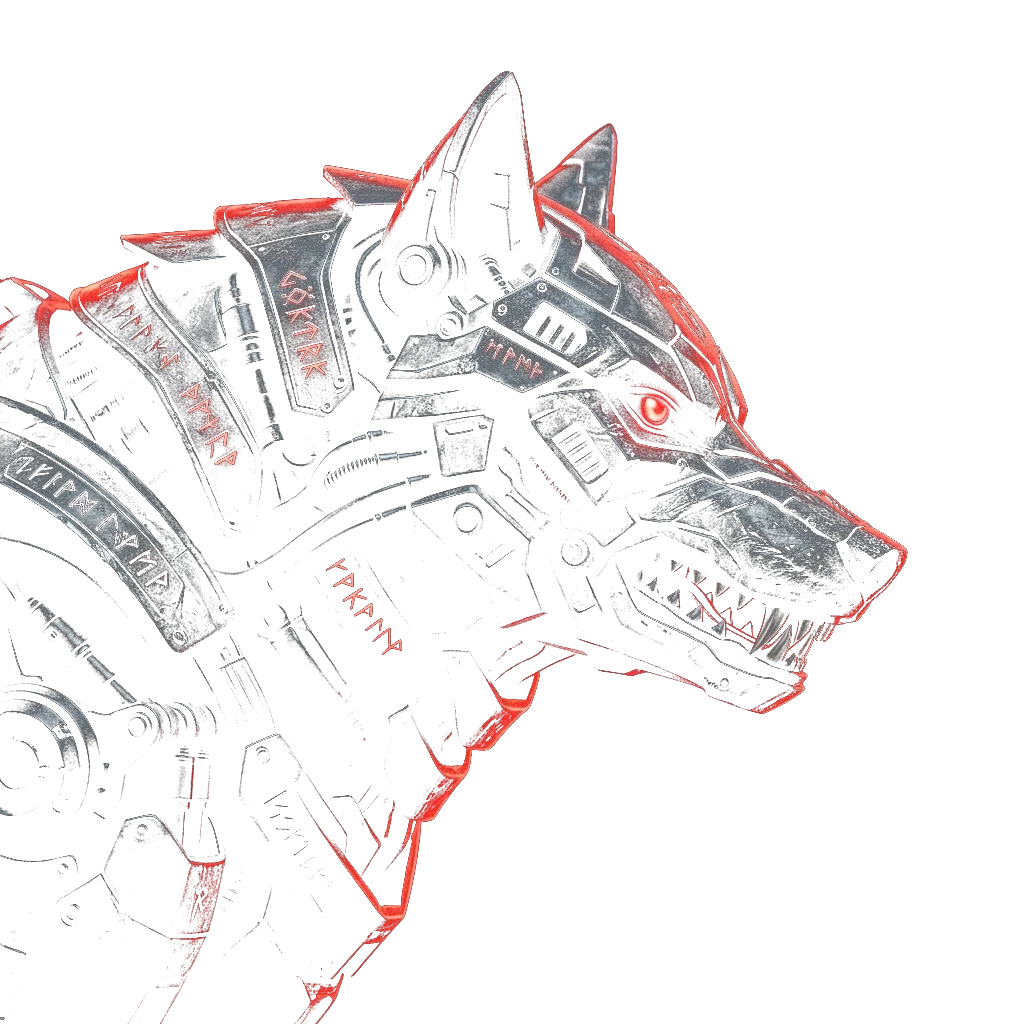

"The Earth did not die. Death would have granted an ending; its suffering would have ceased. The Earth is rotting alive. The magma beneath its skin still pulses, its crust still shudders, its clouds still weep — yet all these signs of life are no longer a life at all, but an organ rejection. The planet is trying to vomit humanity off its surface like a parasite." — A nameless exile from Arz-ı Harabe, origin and date unknown
I. GEOGRAPHIC CONFRONTATION: THE SOIL IS NO LONGER SOIL
The first thing a stranger feels upon stepping onto Arz-ı Harabe is not the sight — it is the smell. A heavy, suffocating compound of sulphur, burnt lithium and synthetic oil that sears the nasal lining, stings the eyes and clenches the stomach like a fist. The second sensation lives in the skin: the corrosive particles suspended in the atmosphere leave microscopic burns upon contact with unprotected flesh — to walk Arz-ı Harabe's surface with exposed skin for any length of time is to be slowly flayed alive.
The sky surrendered its remembered blue aeons ago. The sun rises behind the toxic cloud layers as a yellowish, infected wound, and sets in the same sickly hue. The difference between night and day is merely a graduation between shades of pitch-dark and shades of sulphur. Stars are invisible. The people of Arz-ı Harabe mostly do not know that a universe exists above their heads; for them the sky is a hostile, sealed ceiling beyond which the kinetic satellites of the Silver Syndicate keep their eternal watch.
Continental Collapse
The seismic collapses and boiling acid oceans triggered by the Great Blackout permanently redrew the map of ancient geography. The vast western continents — western Europe and the Americas — were swallowed by the seas long ago, erased even from the tyrants' maps as "Unknown Dead Zones." What remains is a broad but wounded landmass stretching from Anatolia to the Altai, from the Caucasus to the frozen voids of Siberia. Rivers have dried, their beds filled with vitrified mud. Forests have been replaced by deep geological fissures and basalt rifts carved by centuries of acid rain.
Corrosion Deserts
This boundless swampland stretching between the foothills of the Altai and the habitable zones is Arz-ı Harabe's most lethal geography. Centuries of acid rain and synthetic waste seeping from underground have vitrified the soil, forming pitch-black toxic pools in places. On the banks of these pools lie skeletons still draped in the rags of the old KTB's industrial uniforms — the bones do not belong to normal human anatomy. Mutagenic gases and epigenetic collapse have crushed skulls and bent bones asymmetrically. To walk here is to cross the open-air graveyard of humanity's biological history.
II. THE DEAD STRAIT: HEART OF THE RUSTED EMPIRE

The Dead Gorge and the Rusty Palace
The ancient waterway that once joined two continents and their oceans — the Istanbul Bosphorus — is now nothing more than a vast, corroded canyon wreathed in poisonous sulphur fumes and hammered by acid rain. Its waters evaporated centuries ago. On the canyon floor, the spines of orbital galleons that fell from the sky, the snapped titanium cables of ancient suspension bridges and the skeletons of melted skyscrapers have fused into a fossilised wreckage of civilisation.
At the very heart of this wreckage rises the Rusty Palace of Cyber-Khan İlteriş. This monstrous structure — welded together from the spines of galleons corroded by centuries and the skeletons of melted skyscrapers — is an impregnable steel scaffold climbing towards the yellowish clouds. Seen from above it is a throne; seen from below, a cage.
At the Palace's feet, wretched masses swarm like ants through a sea of mud. Here, in the barest and cruellest sense of the word, humanity is surviving — it is not living.
III. DAILY LIFE: THE RHYTHM OF MISERY
Nourishment
In Arz-ı Harabe, hunger is not the exception — it is the norm. An ordinary surface dweller fills their day with synthetic algae paste produced in underground cellars, flavourless protein fungi, and giant desert insects mutated into acid-rain-resistant monstrosities. Food is grey. Its taste carries no recognisable human association. Natural animal meat or a fresh plant is a legendary luxury that reaches only the tables of tyrants — for ordinary people it has no reality beyond fairy tale.
The greens and tea leaves grown in the Silver Syndicate's hydroponic domes on the Moon are financed with iridium and Helium-3 credits extracted from Earth. The hand of the worker who touches a single leaf of that greenery is severed; their daily ration is a tasteless, grey protein paste sucked from tubes.
Water
Water is Arz-ı Harabe's most precious and most blood-soaked currency. Underground water sources are controlled by Rust-Lords and Water-Barons through ruthless market mathematics. A worker who toils for sixteen hours in an acid mine receives a single glass of synthetic, grey water. Brawls at these queues are a daily ritual — people tear at each other's faces for a mouthful of dirty water, crush one another with their corroded limbs. Guards do not break up this savagery; they lash the crowd with electro-shock whips, laughing, watching the misery as though it were entertainment.
The absence of water is not merely a physiological crisis — it is a spiritual decay. Water scarcity is one of the first weapons to kill compassion: when a father murders the neighbour who stole from his child's cup, not a single eye around him blinks.
Shelter
There is no permanent architecture on Arz-ı Harabe's surface. People shelter inside the shattered hulls of galleons that fell from orbit, in the basements of old-world buildings half-buried in soil, and in ramshackle steel barracks permitted by the Rust-Lords. Walls are stitched from polymer panels eaten by acid rain; roofs are covered with melted plastic tarpaulins. In winter's freezing cold these shelters become coffins; in summer's sulphurous heat they become ovens.
A privileged minority — servants of the Rust-Lords, water-distribution officers, mine engineers — live in comparatively sheltered compartments in the lower levels of the Palace. Yet this "privilege" is relative: the air filters there are clogged too, water quotas exist, and a superior's displeasure hurls one back into the surface mud in an instant.
The Body
The people of Arz-ı Harabe are living proof of how far the human body can be stretched. Chronic exposure to acid rain has stripped the skin's natural pigment; the complexion of most surface dwellers resembles a pallid, patchy map dotted with ulcers. Those whose arms or legs have rotted away have their limbs severed and replaced with rusty hydraulic pistons and crude cyber-limbs — bought from markets or ripped from corpses. These prosthetics are not medical solutions but the barbaric, forced marriage of flesh and iron. Infection, unrelenting pain and sudden mechanical failures are part of daily life.
In zones long exposed to genetically corrupting toxic gases, bones have grown asymmetrically, skulls have deformed, and epigenetic damage has seeped through generations. In Arz-ı Harabe the concept of "healthy" is synonymous with "not yet dead."
IV. SOCIAL STRUCTURE: THE PYRAMID OF IRON AND BLOOD
The Cyber-Khanate
At the apex of the pyramid stands Cyber-Khan İlteriş. The absolute tyrant of Arz-ı Harabe is a far more complex figure than any ordinary despot. He has turned the world into a rusted dungeon to shield humanity from its own hubris — from the very same ambition that birthed the Great Blackout — and locked the key inside his own conscience: a tragic warden. Under his command, two great armies — the heavily armoured Cyber-Sipahis who keep watch day and night, and the Cyber-Janissaries created in laboratories with their human nature excised, programmed for absolute obedience — keep the rhythm of fear across every corner of the Earth.
The Neo-Feudal Layer: Rust-Lords, Water-Barons, Mine-Masters
These vassal lords who rule their regions in fealty to İlteriş are the true cogs of Arz-ı Harabe's daily machinery. By monopolising underground water, synthetic food sources and old-world metals, they enslave people through ruthless market mathematics. To live on a Rust-Lord's territory is to submit unconditionally to his rules — how much water you drink, how long you work, even when you sleep.
Acid mines are the nakedness of this exploitation. In settlements cobbled from scrap steel plates and rusty scaffolding at the edge of vast acid lakes, hundreds of people wade in and out of the acid mud chained at the waist, hauling precious metals of the old world to the surface. The melted polymer tarpaulins tied to their heads cannot stop the corrosion from eating through their flesh.
The Base: Surface Dwellers
At the very bottom of the pyramid are the nameless masses. They have neither a master nor a homeland; they breathe sulphur vapour, fill their bellies with synthetic algae, and know that one day they will die quietly under the acid rain or under the electro-shock whips of a Rust-Lord's guards. For them the concept of "future" does not exist; there is only "getting through today."
V. THE MACHINE FAITH: THE SACRALISATION OF IGNORANCE

The Machine Faith — Prostration Before the Sacred Motors
Arz-ı Harabe's deepest wound is not in their bodies but in their minds. The Great Blackout did not merely destroy infrastructure and ecology; it also erased humanity's collective memory. The knowledge, science and philosophy transmitted across generations vanished; all that remained were the colossal corpses of ancient, dead machines whose purpose no one could fathom.
And human beings worship what they cannot understand.
Surface dwellers treat these fossilised mechanical relics — electromagnetic swords whose charge is nearly spent, dark terminals, decaying generators — as gods. They prostrate before "Sacred Motors," anoint their foreheads with burnt machine oil as a holy balm, and beg for the "divine energy" they imagine flowing from cracked circuits. The Rust-Lords consciously nurture this ignorance: the Machine Faith is the cheapest and most effective tool for controlling ignorant masses.
This faith is not a theology; it is an amnesia culture. The fact that their ancestors once sailed to the stars and decoded the secrets of the universe is a dangerous legend erased from their minds. The past is a rebellion that summons death. Knowledge is the dangerous toy of the weak. Ignorance is the guarantee of survival.
VI. LANGUAGE: THE SOUL STRIPPED BARE
If you wish to measure the collapse of a civilisation, look first at its language.
The Rust-Tongue spoken in Arz-ı Harabe is not a language — it is a language's corpse. This primitive argot, stripped of empathy, philosophy and abstract thought, is a communicative wreckage that evolved solely to serve the most basic needs of survival. There are no words to express love, longing or remorse — because these emotions themselves serve no practical function in staying alive.
Kök-Lisan — the sacred tongue that once united all humanity under a single roof, that resonated with the quantum mathematics of the universe — is utterly dead in Arz-ı Harabe. The only place that still remembers its sound, its rhythm, its resonance that turned empathy into a physical sensation, is the Hidden Ötüken beyond the Altai.
VII. THE SOUNDS OF NIGHT: ONE NIGHT IN ARZ-I HARABE
When the sun sinks behind the sulphur clouds like a gangrenous wound, the true face of Arz-ı Harabe emerges.
Surface fires — kindled from acid-resistant cables and dried bones — appear as trembling orange dots in the darkness. People gather around these fires not for warmth but for protection from the predators invisible in the dark — mutated giant desert insects, scorpions nesting in heaps of metal scrap, and autonomous hunter drones that occasionally surface. Fire in Arz-ı Harabe is not a comfort — it is a front line.
Night is not silent. The muffled mechanical rumbling rising from underground — the ghost vibrations of generators thought dead for centuries and Sub-Network tunnels — produces a perpetual low frequency. This sound is the breath of Arz-ı Harabe: the Earth is still breathing, but every breath is a wheeze.
Children grow up accustomed to these night sounds. For them silence is the harbinger of death — because if a generator has gone quiet, either the fuel has run out or someone has stolen it. In either case blood will be spilled.
When rain begins — and in Arz-ı Harabe rain is always acid — people develop a reflex not towards the direction they are running but towards the nearest metal roof. A single drop on exposed skin burns instantly, leaving a white, blistered mark. Until children learn this, they carry the signature of acid rain on their faces.
And sometimes, very rarely, the clouds part. The pale silver light of the Moon — the Silver Syndicate's stronghold — briefly illuminates Arz-ı Harabe's naked misery. The masses below raise their heads to that bright point without knowing what they see: a celestial body, or the palace of the masters who have indebted their blood and their breath? They do not know the answer, because they long ago stopped asking.
VIII. BEING HUMAN ON THE SURFACE: THE LAST SQUARE METRE OF CONSCIENCE
Amid all this horror, a question seeps through: has humanity truly died in Arz-ı Harabe?
No. But it is gravely wounded.
Right beside the savagery of two brothers fighting each other in the mud, a mother silently gives her share of synthetic algae to her child. A worker returning from a sixteen-hour shift at the acid mine gently wipes his sleeping son's forehead with corroded fingers. In the noisy bazaar of the Rusted Silk Road, a smuggler leaves stolen medicine for a stranger he does not know and vanishes without giving his name.
These moments do not enter Arz-ı Harabe's statistics. No Rust-Lord records them. The Cyber-Khan's sensors do not detect this frequency. But they exist — just as, metres below the vitrified desert, a vein of clean water still flows.
The cruellest and most hopeful thesis of Root Order philosophy is precisely this: compassion is not a luxury that grows in parallel with comfort. It is an organ that can take root even at the very bottom of decay, hunger and ignorance — the last thing our nature will ever abandon. The people of Arz-ı Harabe do not know this — yet they do it.
And perhaps this is why a man walking alone on the snow-covered peaks of the Altai is still fighting for them.
Root Order Universe Archives — First Article therootorder.com | kok-nizam.com